
Must an indebted company necessarily find cash?
A company may own plants, buildings or subsidiaries and, at the same time, lack the cash to meet its next maturities. The usual responses are well known: borrow again, sell an asset to raise cash, negotiate extensions. There is, however, another route: offering the creditor an asset or a share of the equity directly, in return for waiving part of what it is owed.
The debt does not disappear without consideration. It is an agreement on how to share a value that the company cannot, or can no longer, pay immediately in cash. The creditor accepts another form of consideration because it considers that, under certain conditions, it is worth more than an uncertain repayment.
Two ways to exchange a claim for value
Handing an asset to the creditor: the debt-for-assets swap
In a debt-for-assets swap (known in French law as dation en paiement), the company transfers a building, a subsidiary or a shareholding to its creditor. In return, the creditor waives all or part of its claim. The asset is transferred outright: it is not merely collateral, as in an asset-backed loan.
Opening the equity: the debt-for-equity swap
In a debt-for-equity swap, the creditor receives shares. The company reduces its debt, but existing shareholders see their percentage of ownership fall, and may lose control if the stake transferred is a majority one.
Some transactions combine both mechanisms with new loans, maturity extensions and preferred shares. Preferred shares may in particular give their holder priority on certain distributions or in a liquidation; they are not treated like conventional bank debt.
What New Fortress Energy actually negotiated
New Fortress Energy (NFE) develops and operates liquefied natural gas and energy infrastructure. On 11 September 2026, the company completed the restructuring of its main financial debts, following the approval of a restructuring plan in the United Kingdom and its recognition in the United States.
The principal of the debt concerned fell from about $5.7 billion to $710.8 million. In return, creditors received in particular:
- ownership of BrazilCo, which groups the transferred Brazilian businesses and certain other assets within the disposal perimeter;
- 65% of the common equity of “New NFE”, the company emerging from the restructuring, at closing and before any later effects of certain instruments and compensation plans;
- preferred shares carrying a liquidation preference of about $2.45 billion, as well as $0.2 billion of preferential rights to cash flows linked to FLNG 2, the group’s second floating liquefaction unit;
- a new CoreCo loan structure: $571.3 million of reinstated loans, supplemented by $36.5 million of new senior loans and $103 million of new junior loans. FLNG 2 financing and other borrowings fall within other perimeters.
| Item | Amount |
|---|---|
| Principal debt before restructuring | ≈ 5,700 |
| CoreCo principal debt after restructuring | 710.8 |
| of which reinstated loans | 571.3 |
| of which new senior loans | 36.5 |
| of which new junior loans | 103.0 |
| Liquidation preference of the preferred shares | ≈ 2,450 |
| Preferential rights to FLNG 2 cash flows | 200 |
The correct reading
The principal of certain debts has fallen, but in return creditors received assets, securities and new financial rights. The $2.45 billion liquidation preference cannot simply be subtracted from the $5.7 billion: these instruments differ both in nature and in rights. The reduction of about $5 billion in principal is not a net saving for shareholders.
Why would a creditor accept such an exchange?
Because it does not simply compare the amount stated in the contract with the value of the asset offered. It compares what it can reasonably recover under several scenarios: if the company continues trading, if it sells its assets, or if no agreement is reached. A €10 million claim on a company unable to pay does not necessarily have a recovery value of €10 million.
Receiving a profitable subsidiary, a stake in a restructured company or priority rights may therefore be preferable to waiting for a hypothetical repayment, provided the creditor can value what it receives, sell it one day and bear the risk. For its part, the company must not give up an asset essential to its survival.
NFE’s profit shows why one must look beyond the debt
On 16 November 2026, NFE reported third-quarter revenue of $335.8 million and net income of $863.4 million. Taken on their own, these figures might suggest a spectacular turnaround. Yet this result includes about $1.565 billion of non-cash accounting gains linked to the restructuring and the extinguishment of debt: this is not $1.565 billion of cash received.
Adjusted EBITDA amounted to only $48.4 million for the quarter, and includes $39.4 million of contract novation revenue whose recurrence cannot be assumed. Above all, NFE states that an outage affecting the FLNG 1 facility raises substantial doubt about its ability to continue as a going concern as of the report date.
The lesson for a business leader
Reducing debt does not, on its own, repair margins, contracts, facilities or collections. A restructuring that succeeds on paper never removes the need to check what the remaining businesses will actually generate in cash.
What would this look like in an SME or a mid-sized company?
Consider an industrial company that must repay a significant debt within the next twelve months. It owns a secondary warehouse, a stake in a subsidiary and a viable core business. Before seeking a new loan, it can examine whether some creditors would be willing to accept one of these assets, or an equity stake, in exchange for a partial waiver of their claim. This is only an illustration: no agreement is guaranteed in advance.
The real difficulty is not finding an asset to offer. It lies in answering four questions: what is this asset worth under realistic sale conditions? What security already encumbers it? Does the creditor gain more than in a no-deal scenario? Will the company still be able to operate after giving it up?
In France, two practical points must be added. First, a debt waiver may constitute taxable income for the company that benefits from it, subject to specific regimes; second, a debt-for-equity swap requires a capital increase, whose authorisation conditions depend on the company’s legal form, its articles of association and any delegations already granted. These negotiations are often conducted within an amicable and confidential framework, such as conciliation or a mandat ad hoc, or within safeguard proceedings. These aspects must be assessed case by case with the company’s chartered accountant and lawyer.
How to prepare a serious negotiation
1 — Start with the debt, not the assets
You need to know precisely who the creditors are, for what amount, with what maturity and what security. A preferred bank, a supplier and a bondholder do not negotiate with the same rights or the same objectives.
2 — Value what could be transferred
Subsidiaries, real estate, shareholdings, intellectual property, contractual rights: which assets can be mobilised depends on their transferability, their verifiable value and the obligations attached to them. Book value is not enough. Tax, security interests and authorisations can entirely change the outcome of the transaction.
3 — Compare the deal scenario with the no-deal scenario
A credible proposal shows, with figures, what each creditor could recover under the different scenarios. It also measures shareholder dilution, implementation costs and the company’s future cash position. Negotiation rests on this comparison far more than on intentions.
The role of Allioua Global Consulting
This kind of thinking begins with an economic diagnosis. Our role is to map the debts, analyse the assets that can be mobilised, build valuation and cash scenarios, and then prepare the material on which a discussion with creditors can begin.
Such an engagement is carried out within a clear scope. Legal and tax matters, insolvency proceedings and regulated activities require, depending on the case and the country, the involvement of lawyers, licensed experts and specialised financial advisers. The firm works on strategic analysis and on coordinating the work that falls within its field of competence.
Key takeaways
A creditor is not always bound to receive money alone in order to agree to reduce its claim. The NFE case offers an example of exceptional scale. It also shows the price: loss of assets, dilution of the equity, new rights granted to creditors, and possibly significant operational risks that remain.
For a business leader, the challenge is to examine this option early enough to keep room for negotiation. The question is not only how much of the debt can disappear, but what company will remain once the agreement is signed.
What you have learned
The key concepts of this analysis, explained simply. Click on a term to reveal its definition.
Debt-for-assets swap
A company hands an asset (building, subsidiary, shareholding) to its creditor to extinguish all or part of its debt. The asset changes owner: it is not mere collateral.
Debt-for-equity swap
The creditor gives up part of what it is owed and becomes a shareholder in return. The company owes less, but its shareholders now share the equity with the creditor.
Dilution
The fall in the percentage held by existing shareholders when new shares are issued. Owning 50% of a company can become 20% once new shareholders come in.
Principal of a debt
The amount borrowed itself, excluding interest. It is the sum that must be repaid at maturity.
Preferred share
A share with special advantages, such as being paid before other shareholders. In return, it often carries fewer voting rights.
Liquidation preference
The right to be paid first, up to a set amount, if the company is sold or liquidated. The other shareholders only share what is left.
Non-cash accounting gain
A gain that improves profit in the accounts without bringing any money in. Wiping out a debt, for example, creates a gain on paper, not cash.
Adjusted EBITDA
A measure of the profitability of day-to-day operations, before interest, tax, depreciation and amortisation, corrected for items deemed exceptional. It reflects real performance better than net income, but each company chooses its own adjustments.
Going concern
The assumption that the company will be able to continue operating over the next twelve months. When serious doubt exists, management and auditors must disclose it.
Conciliation and mandat ad hoc
Two amicable and confidential French procedures in which a professional appointed by the court helps the company reach an agreement with its creditors, before the situation becomes critical.
LNG and LNG carrier
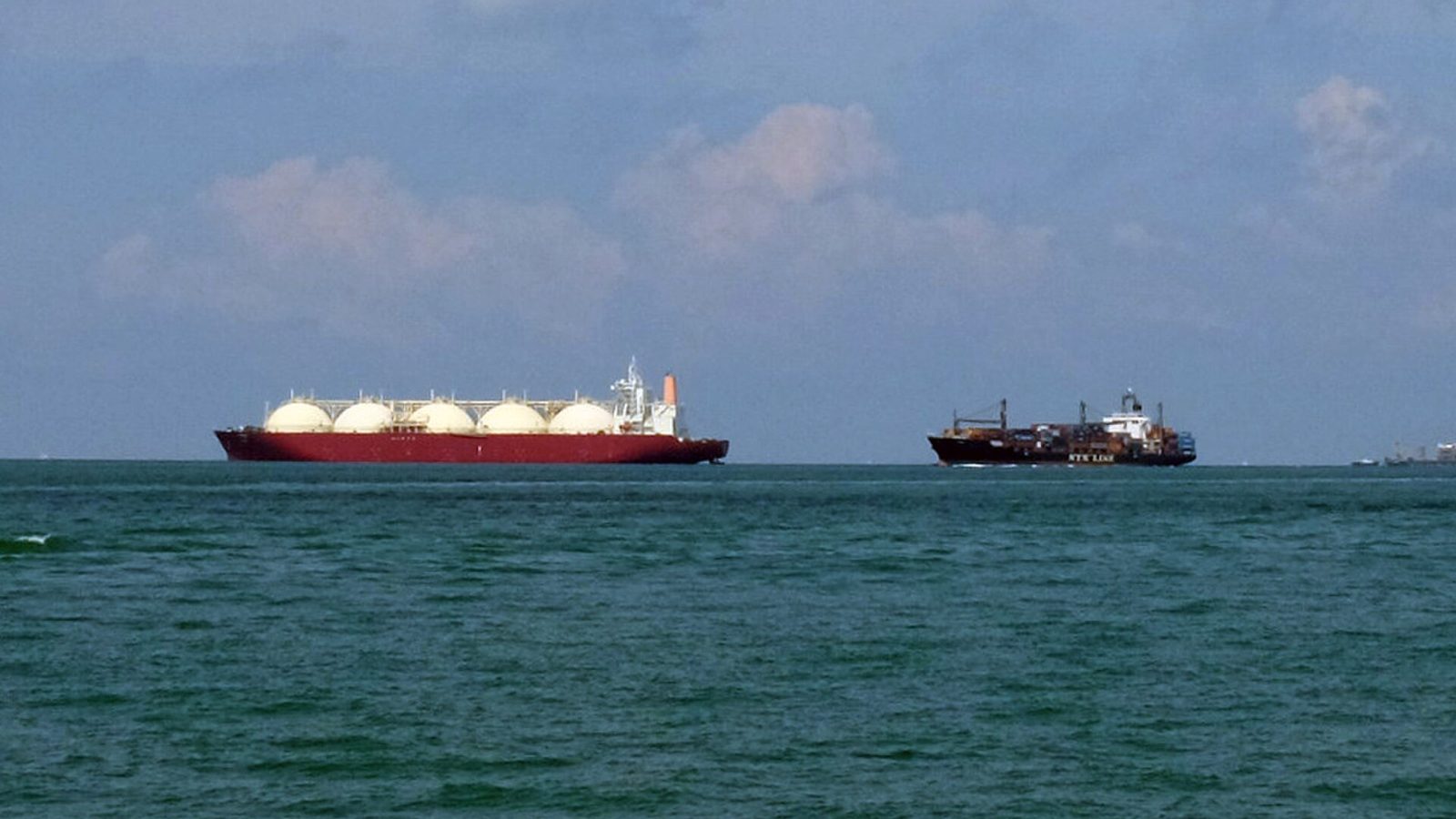
Liquefied natural gas (LNG) is gas cooled to about −160 °C so that it takes up far less space. An LNG carrier is the ship that transports it in insulated tanks.
Independent publication by Allioua Global Consulting, based on public communications available as of 16 November 2026. New Fortress Energy is not presented as a client of AGC. This analysis constitutes neither a tailored restructuring proposal, nor legal or tax advice, nor an investment recommendation.
Sources
- New Fortress Energy — restructuring completion press release (11 September 2026)
- New Fortress Energy — third-quarter 2026 results (16 November 2026)
- SEC — New Fortress Energy, Form 10-Q, period ended 30 September 2026
- SEC — New Fortress Energy, Form 8-K/A, pro forma effects of the restructuring
- BOFiP-Impôts (French tax administration) — guidance on debt waivers